
Building Your Financial Safety Net: How to Save Your First $1,000 (Stress-Free)
Anúncios
Most financial advice skips straight to retirement accounts and investment portfolios. Before any of that makes sense, there is one number that matters more than any other: $1,000. That first thousand dollars sitting in a dedicated savings account is the difference between a flat tire being an inconvenience and a flat tire becoming a debt spiral. Here is how to get there without feeling like you are depriving yourself of everything.
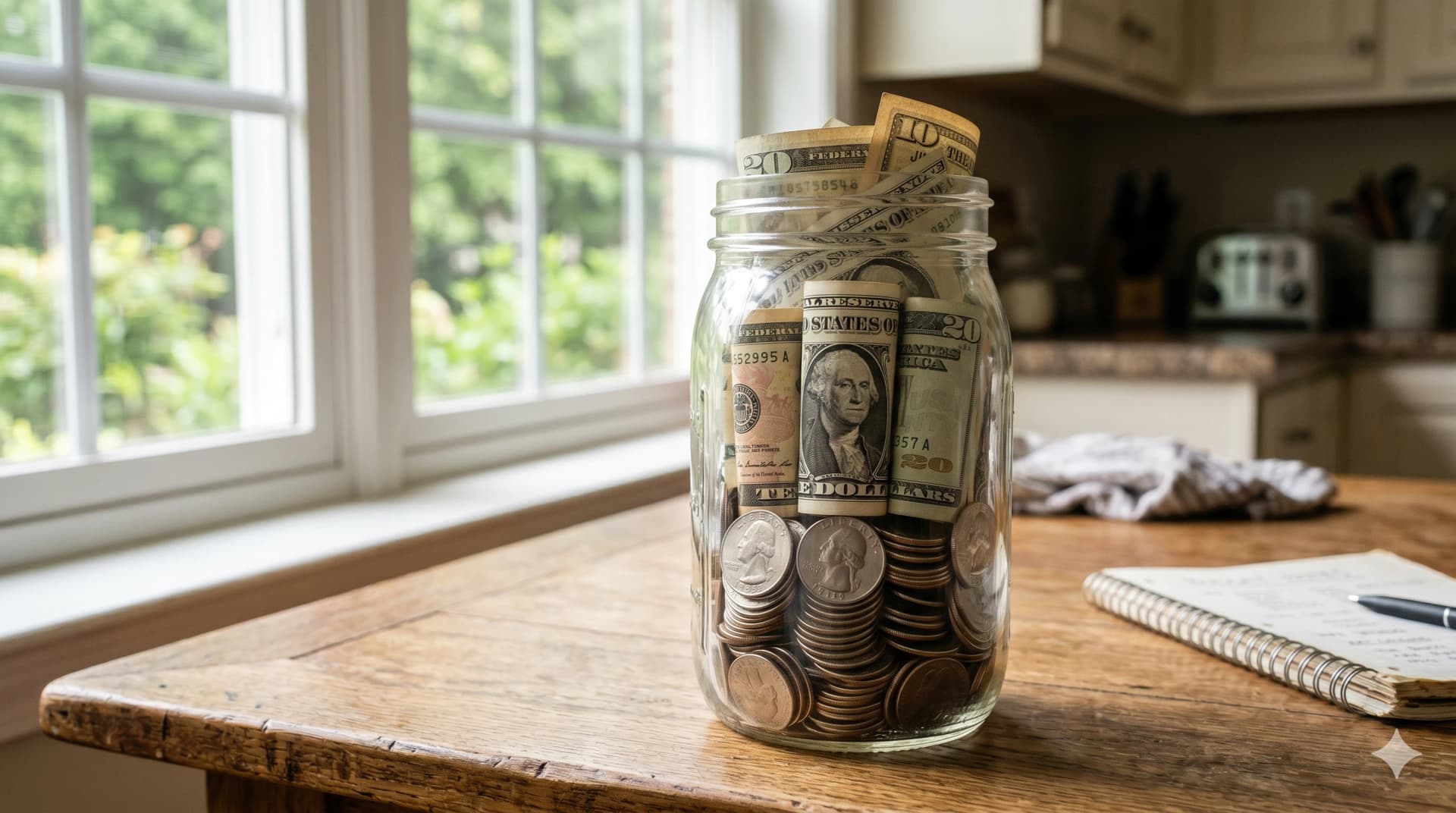
Why $1,000 is the number that changes everything
A survey by Bankrate found that fewer than half of Americans could cover an unexpected $1,000 expense from savings alone. That means one car repair, one urgent medical visit, or one appliance failure sends millions of households straight to a high-interest credit card or a payday loan.
One thousand dollars will not cover every emergency. But it covers most of them—and it breaks the cycle where every small financial surprise becomes debt. Personal finance experts often recommend $1,000 as a "starter emergency fund" precisely because it is achievable in weeks, not years, and it delivers an immediate, measurable reduction in financial stress.
Understanding why you want this buffer also shapes how you approach building it. If you are currently carrying high-interest credit card debt, read our guide on good debt vs. bad debt to decide whether to save first or pay down debt first—the answer depends on your interest rates.
The fastest paths to $1,000 without a dramatic lifestyle change
Speed matters when you are building a starter fund. The longer the timeline, the more life intervenes. Here are the approaches that consistently work for people starting from zero:
- 1Automate a fixed transfer on payday. Even $50 per paycheck adds up to $1,300 a year on a biweekly schedule. Set the transfer to happen the same day your paycheck hits so you never see the money in your checking account.
- 2Audit your subscriptions this week. The average US household pays for 4-6 subscriptions they no longer actively use. Canceling two or three streaming services you forgot about can free up $30–$50 a month immediately. Direct every dollar of that to your fund.
- 3Deploy windfalls with intention. Tax refunds, birthday money, work bonuses, and marketplace sales from clearing out your closet are all "found money." Committing 100% of these to your $1,000 goal, even for just three months, can get you there faster than any budgeting tweak.
- 4Spend one month tracking before cutting. Blind cuts feel punishing and rarely stick. If you run a 30-day spending challenge first, you will spot the two or three categories where money is quietly leaking—and trimming those feels like a choice rather than a punishment.
Where to keep your emergency fund (and where not to)
Your emergency fund should be liquid and boring. That means a high-yield savings account (HYSA) at an FDIC-insured bank or credit union—not a checking account you spend from, not an investment brokerage account, and definitely not a shoebox.
As of 2025, many online HYSAs offer annual percentage yields (APY) between 4% and 5%, compared to the 0.01% average on traditional savings accounts. On $1,000, that difference is roughly $40–$50 per year—not life-changing, but the higher yield also reinforces the mental separation between your emergency fund and your everyday spending money. Keeping it at a different institution than your checking account adds one layer of friction that prevents impulse spending.
The FDIC insures deposits up to $250,000 per depositor per institution. For specific account recommendations, compare current rates at the CFPB's savings tools—they maintain an up-to-date, unbiased comparison.
What to do the day you hit $1,000
Acknowledge it. Seriously. Most people blow past financial milestones without pausing, then wonder why they lose momentum. Reaching $1,000 is a measurable, meaningful step—one that puts you ahead of a significant portion of US households.
Then decide what comes next based on your situation:
- If you have high-interest debt (credit cards above 15% APR), pivot aggressively to paying that down before building your fund further.
- If your employer offers a 401(k) match you are not yet capturing, contribute enough to get the full match—it is an immediate 50–100% return on that money.
- If you are debt-free or close to it, build toward three to six months of living expenses over the next 12–18 months.
Once you have the emergency fund in place, you will naturally start thinking about putting money to work. Our investing for beginners guide is a practical starting point for the step after the safety net.
Anúncios
Your action plan: $1,000 in 90 days
Most people can reach this goal in 60–90 days with a combination of automatic transfers and one-time moves. Here is the simplest version:
- Open a separate high-yield savings account today (takes about 10 minutes at most online banks).
- Set up an automatic transfer of $100–$150 per paycheck to that account, scheduled for payday.
- Cancel unused subscriptions this week and redirect the savings manually each month.
- Commit your next windfall (tax refund, bonus, any extra income) entirely to the fund until you hit $1,000.
- Do not touch it unless there is an actual emergency—inconvenience is not an emergency.
The hardest part is not the math. It is the inertia of getting started. Opening an account and setting that first automated transfer takes less time than watching a single episode of anything. The account that exists, even with $50 in it, will grow. The account you meant to open will not.
Anúncios